Westview Publishing Co., Inc.
This was the website for Westview Publishing in the early 2000's.
Content is from the site's archived pages and other sources.
The Westview newspaper was sold in 2010 to the Memphis Daily News.
WestviewPublishing.com is now ideasintobooks.net. Go to ideasintobooks.net. This new site is an author subsidy, print-on-demand publishing company focused on its authors.
We know that every book and author is different, and that the process of publishing YOUR book is primarily about YOU. We want to help you create the book you envision. Our commitment is to getting your book Published by Westview.
"Westview's talents for bringing together a dream exceeded all expectations! Insightful, honest, competent, and professional...absolutely the best!"
William Beck
Author of H.A.A.R.P.'s Fury
The content below is from the site’s 2003-2007 archived content.
| Your Book Can Be A Success! | |||||||||||||||||||||||||||||||||||||||||||||||||||||||||||||||
| Thousands of authors have self-published successful books. In fact, the digital revolution has made it easy to turn your word processing file into a professional, bookstore quality book.
One technology that makes this possible is "print on demand". The digital file of your book is stored electronically and books are printed individually to fill customer orders. There is no longer a need to inventory thousands of books in order for you to get a reasonable per copy book price. |
|||||||||||||||||||||||||||||||||||||||||||||||||||||||||||||||
| Who Can Benefit From Our Publishing Plans? |
|||||||||||||||||||||||||||||||||||||||||||||||||||||||||||||||
| Unpublished Authors | |||||||||||||||||||||||||||||||||||||||||||||||||||||||||||||||
| The struggle to get your work accepted by a traditional publishing house can be overwhelming. Authors can experience seemingly endless submissions to editors whose reasons for rejection may have nothing to do with the quality of work. Traditional self-publishing can offer a solution, but requires buying and storing hundreds or even thousands of copies of your book. However, self-publishing with Westview's print-on-demand services allows you to maintain your editorial integrity without having to invest in an inventory of pre-printed books. | |||||||||||||||||||||||||||||||||||||||||||||||||||||||||||||||
| Authors With New Works | |||||||||||||||||||||||||||||||||||||||||||||||||||||||||||||||
| If you've already discovered the benefits of being self-published and have a new work, we can help you with high-quality publishing services. We also have one of the best author book purchase plans in the business. | |||||||||||||||||||||||||||||||||||||||||||||||||||||||||||||||
| Genealogists and Family Historians | |||||||||||||||||||||||||||||||||||||||||||||||||||||||||||||||
| For a limited edition work, traditional small print runs can still be far too costly to permit publication of a genealogical work that would otherwise be a family heirloom. With our services, you can limit the copies printed to just enough to give to the individuals or libraries that would directly benefit from the publication. The digital file of your book is kept in electronic storage, so additional copies are always available, even if needed one at a time. | |||||||||||||||||||||||||||||||||||||||||||||||||||||||||||||||
| Authors Wanting to Reprint Existing Works | |||||||||||||||||||||||||||||||||||||||||||||||||||||||||||||||
| You may have run out of copies of your work and need to reprint, but would prefer not to have to inventory thousands of copies just to get a reasonable cost per copy. With our print-on-demand services, there's no need to let your cherished work slide into the past. | |||||||||||||||||||||||||||||||||||||||||||||||||||||||||||||||
| Organizations Publishing Books as a Fundraising Event | |||||||||||||||||||||||||||||||||||||||||||||||||||||||||||||||
| Thousands of organizations fund their activities by self-publishing cookbooks and local history books. The most prohibitive factor in running this type of fundraising event is the possibility that all the profits will be tied up in unsold copies. We eliminate this problem completely by using high-quality, print-on-demand services to manufacture only the copies needed to fill orders. Every single book the organization sells creates value. | |||||||||||||||||||||||||||||||||||||||||||||||||||||||||||||||
| Supplemental Educational or Motivational Materials | |||||||||||||||||||||||||||||||||||||||||||||||||||||||||||||||
| Many consultants and educators sell books at seminars as an added value item. The typical seminar is rarely long enough to do more than outline concepts. Self-publishing a book detailing your ideas can further improve the participants experience and increase the author's net proceeds. With Westview Publishing, you can have just enough books printed for the current seminar, avoiding the need to inventory thousands of books. | |||||||||||||||||||||||||||||||||||||||||||||||||||||||||||||||
| Authors Whose Books Are Out-of-Print | |||||||||||||||||||||||||||||||||||||||||||||||||||||||||||||||
| Resurrecting a once popular title can feel as impossible as raising the Titanic. We can make that process smooth, easy and cost-effective. | |||||||||||||||||||||||||||||||||||||||||||||||||||||||||||||||
| Authors of Children’s Books | |||||||||||||||||||||||||||||||||||||||||||||||||||||||||||||||
| Color printing of low page count books can be very expensive in quantities under 1,000. With our new print-on-demand options, it is possible to print only a few hundred copies at a very reasonable cost per copy. | |||||||||||||||||||||||||||||||||||||||||||||||||||||||||||||||
| Authors Needing Pre-release Copies | |||||||||||||||||||||||||||||||||||||||||||||||||||||||||||||||
| It is sometimes necessary for an author to develop a pre-release edition of their book for use in marketing and for review solicitation. With no minimum order size, print-on-demand is the perfect solution. | |||||||||||||||||||||||||||||||||||||||||||||||||||||||||||||||
 |
|||||||||||||||||||||||||||||||||||||||||||||||||||||||||||||||
|
The bottom line? If you are an author and are writing a book, we can help you with publishing and selling your creative accomplishment. Call us at (615) 646-6131 for more information.
+++ Titles From Westview
+++
Author Testimonials
How to Contact Us
Westview Publishing, Inc. 8120 Sawyer Brown Road, Suite 107 Our HistoryWestview Publishing Co., Inc. was founded in 1978 by Doug Underwood. We publish newspapers and books, and our home office is in Nashville, Tennessee.
|
 What is this place, this way of life, this "A Club" that so many risk so much to join and others look to exploit.from without and from within? Since the beginning, this place, that we now call the US of A, has been built by people from all over the earth, some as explorers, some as exploiters, some as settlers, and some as founding colonists. Slaves, immigrants, convicts, and natives have also helped shape the USA. America is a magnet that attracts the restless and creative from every foreign land.




More Background On Westview Publishing
Westview Publishing Co., Inc. represents one of Nashville’s enduring independent media and publishing enterprises. Established in 1978 by Doug Underwood, the company began as a local newspaper serving the West Nashville area before expanding into book publishing in the early 2000s. Known for its deep local roots, personalized author relationships, and dedication to community journalism, Westview evolved from a neighborhood news outlet into a full-service print-on-demand book publisher.
Today, the original WestviewPublishing.com domain redirects to IdeasIntoBooks.net, reflecting the company’s modern evolution as an author-subsidy, print-on-demand (POD) publishing company still emphasizing author empowerment and quality production.
Founding and Early Years (1978 – 1990s)
Founded by Doug Underwood, The Westview Newspaper emerged at a time when community journalism was essential to the identity of suburban Nashville. Operating from 8120 Sawyer Brown Road in Bellevue, Tennessee, the paper quickly became a staple for residents of West Nashville, Dickson, Cheatham, and Williamson Counties.
In an era long before digital hyperlocal blogs, The Westview covered neighborhood issues, education, civic affairs, and local arts — bridging the gap between small-town reporting and metropolitan news. Its readership remained fiercely loyal, owing to its accessible tone and family-owned ethos.
By the late 1990s, the publication was a trusted voice in the western suburbs, offering space for community groups, educators, and small businesses that often lacked access to major metropolitan outlets.
Expansion into Book Publishing
Responding to Local Authors’ Needs
In 2003, Westview expanded into book publishing — a logical progression given its experience with editing, printing, and content production. The move was initiated partly due to requests from local writers and the growing creative community around Bellevue and Nashville’s broader artistic scene.
Under the direction of Paula Underwood Winters (publisher) and Hugh Daniel (general manager of the book division), Westview became a haven for first-time authors, genealogists, historians, and educators who sought affordable, accessible publishing options without sacrificing editorial integrity.
Print-on-Demand Innovation
At a time when the self-publishing industry was still emerging, Westview embraced digital printing technology and print-on-demand (POD) systems. These tools eliminated the need for authors to purchase and store thousands of unsold books, dramatically lowering the barrier to entry for independent publishing.
Authors submitted digital files, which Westview stored electronically. When readers ordered a copy, the book was printed and shipped individually — ensuring that every sale produced real value. This approach mirrored early publishing disruptors like Lightning Source and Lulu, but Westview distinguished itself through local, personal relationships and hands-on editorial support.
Services and Publishing Philosophy
Westview’s book division catered to a wide variety of creators, reflecting its inclusive “every author matters” philosophy. Their plans were designed for flexibility, affordability, and independence.
Who Benefited from Westview’s Programs
-
Unpublished Authors — Writers struggling with rejections from major publishing houses found a path to publication while maintaining control over their creative vision.
-
Authors of New Works — Repeat self-publishers used Westview to manage subsequent books, taking advantage of generous author purchase plans.
-
Genealogists & Family Historians — Limited-edition works became feasible thanks to small-batch printing, turning family histories into heirlooms.
-
Organizations & Fundraisers — Nonprofits, schools, and civic groups often produced local cookbooks or historical compilations through Westview, knowing every copy could be printed on demand without risk of overstock.
-
Educators & Motivational Speakers — Seminar leaders could print only enough copies for events, expanding their teaching materials while avoiding bulk inventory.
-
Out-of-Print Authors — Writers with lapsed titles found an easy way to reintroduce their work to the market.
-
Children’s Book Authors — Color POD printing made small runs of illustrated works financially practical.
-
Authors Requiring Pre-Release Editions — Review and promotional copies could be printed in small quantities for early circulation.
This adaptable structure made Westview particularly appealing to first-time authors who might otherwise be excluded from traditional publishing due to cost or complexity.
Staff and Leadership
The company’s team combined editorial skill with personal commitment. Archived materials list:
-
Paula Underwood Winters, Publisher
-
Hugh Daniel, General Manager / Author Representative
-
Bob Allen, Author Representative
-
Kathryn Darden, Author Representative
-
Joyce Jackson, Editor / Author Representative
-
David Pollitt, Author Representative
-
Stephanie Poplar, Author Representative
-
Eric T. Wright, Editor / Author Representative
This mix of editors and publishing advocates reinforced Westview’s reputation for direct communication and accessibility, as highlighted repeatedly in author testimonials.
The Westview Newspaper Sale (2010)
After more than three decades as a family-run publication, the Westview Newspaper was sold in 2010 to the Memphis Daily News, one of Tennessee’s oldest business and legal publications. The sale marked the end of an era for Westview’s community news division but preserved its book-publishing branch under separate management.
The transfer allowed the company to focus exclusively on the book publishing side — an increasingly digital, scalable, and nationwide enterprise.
Transition to IdeasIntoBooks.net
Following the sale, WestviewPublishing.com evolved into IdeasIntoBooks.net, the successor brand that carries forward Westview’s mission. The new site functions as an author-subsidy imprint, emphasizing collaboration and empowerment.
Its guiding statement — “Every book and author is different, and the process of publishing YOUR book is primarily about YOU” — echoes the original Westview philosophy.
IdeasIntoBooks continues to operate from Tennessee, offering manuscript consultation, editing, formatting, cover design, and ISBN registration, all under the continuing Westview imprint.
Notable Titles and Authors
Westview’s catalog reflected an eclectic mix of genres — memoirs, local histories, novels, poetry, and instructional works. Among the archived titles were:
-
“The A Club: What Is an American?” by Ayceinr G. O’Wynn — a sociological reflection on U.S. identity and immigration.
-
“The Final Battle” by Randy Moore — a historical or military-themed work.
-
“Rhapsodies from the Bittersweet” and “Journey Through the Bittersweet” by Danna J. Gordon.
-
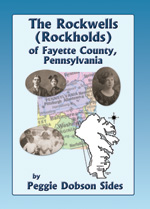
“The Rockwells (Rockholds) of Fayette County, Pennsylvania” by Peggie Dobson Sides — an example of Westview’s genealogical niche.
-
“Life on the Creeks” by the PALS Chapter of CCHGA — a community history priced at $35.
-
“Pastor Jack’s Real Life and Conflicts” by Jack Stone, a personal memoir of ministry.
These works reflected the diverse author community that Westview served — educators, veterans, ministers, and family historians — people writing from passion rather than commercial ambition.
Author Experiences and Testimonials
The archive includes numerous heartfelt testimonials that illuminate why Westview earned lasting loyalty.
-
Patrick Bryan McFadden, author of CODE RED: Diary of a Nation Scorned, praised the “expert and personal assistance from the moment of contact to final printing,” describing the process as reassuring and collaborative.
-
William Beck, author of H.A.A.R.P.’s Fury, highlighted Westview’s “insightful, honest, competent, and professional” service.
-
Phyllis Jean Flowers, author of A Blur of Mass Motion, recounted discovering Westview through The Westview News itself, and praised its full-service approach — from design and scanning to book signings and promotional materials.
-
E.D. Thompson, author of Nashville Nostalgia, noted the team’s care in formatting, cover design, and picture placement.
-
Merry Anne Pierson, genealogist and author of The Descendants of Lawrence Pearson, emphasized affordability and speed: her orders shipped “within a week or two,” without the need to warehouse books.
Such testimonials demonstrate how Westview blurred the line between publisher and partner, offering empathy and enthusiasm rare in the broader publishing industry.
Cultural and Community Significance
Westview’s dual identity — as both a local newspaper and publishing house — mirrors Nashville’s own creative evolution.
Before the rise of “Music City” as a multimedia hub, Westview captured the neighborhood-scale stories that defined the city’s sense of place. Its later support for self-published authors extended that mission, allowing ordinary Tennesseans — teachers, soldiers, genealogists, and retirees — to preserve their own voices in print.
By democratizing access to publishing, Westview anticipated the self-publishing boom that platforms like Amazon KDP and IngramSpark would later dominate. Yet unlike those global systems, Westview offered personal mentorship and regional connection, helping authors hold real book signings and interact directly with local readers.
Editorial Quality and Aesthetic Approach
Although an author-subsidy publisher, Westview distinguished itself through professionalism.
Its staff worked closely with each writer on cover layout, typography, and proofing. Many authors praised Hugh Daniel for his “hands-on involvement” and design expertise, while editors like Joyce Jackson and Eric T. Wright brought literary sensibility to independent manuscripts.
Books were assigned ISBNs, registered with the Library of Congress, and listed for retail sale — providing self-published authors the legitimacy traditionally reserved for mainstream publishers.
Awards, Reviews, and Media Mentions
While Westview did not compete in high-profile publishing awards, its authors frequently received coverage in local Tennessee media. The Westview News and related community outlets regularly featured new releases and author events.
Additionally, Nashville bookstores and libraries stocked select Westview titles, acknowledging their importance to regional cultural preservation — especially genealogies and local histories documenting middle Tennessee’s families and towns.
Legacy and Continuing Mission
The legacy of Westview Publishing lies not in bestseller lists but in the sheer diversity of lives and stories it brought to print.
From memoirs of small-town pastors to detailed family chronicles, Westview served as both publisher and cultural archivist for Tennessee voices. Its modern incarnation, IdeasIntoBooks.net, continues that legacy — providing accessible publishing paths to writers across the U.S. and abroad.
Despite the transformations of the publishing world, Westview’s founding values — community, integrity, and personal service — remain visible in its successor’s commitment to author individuality.
Contact and Present-Day Presence
Westview’s original office was located at:
Westview Publishing, Inc.
8120 Sawyer Brown Road, Suite 107
P.O. Box 210183
Nashville, TN 37221
Phone: (615) 646-6131
Today, inquiries are directed through IdeasIntoBooks.net, which continues to operate under the Westview imprint. The new platform maintains online author galleries, book-order systems, and resources for manuscript preparation.
From its beginnings as a Nashville community newspaper in 1978 to its role as a supportive partner for independent authors, Westview Publishing Co., Inc. exemplifies the adaptability and enduring spirit of local media.
Its history reflects how a small, family-run enterprise can evolve with technology — from offset printing to digital POD — without abandoning the human touch that makes publishing meaningful.
In a landscape increasingly dominated by algorithmic marketing and mass-produced content, Westview’s approach stands as a reminder that publishing, at its heart, is about connection — between writers and readers, stories and communities, creativity and permanence.
